

NSW: highest number of Indigenous deaths in custody ever recorded in a single year
In 2025, New South Wales has already seen 12 Indigenous people die while in custody, marking the highest number ever recorded in a single year.
State Coroner Teresa O’Sullivan described the milestone as “profoundly distressing,” emphasising that these are not mere statistics but individual lives, and declared that each death “demands independent and careful scrutiny.”
Overrepresentation & systemic imbalance
Over the past five years, the number of Aboriginal and Torres Strait Islander adults in NSW prisons has risen by nearly 19 %, while non-Indigenous incarceration rates have declined.
As of mid-2025, Indigenous people make up a disproportionately large share of the state’s prison population, despite forming a small fraction of the general population.
Nearly half of Indigenous adults in custody are on remand (i.e., not yet convicted) — a population especially vulnerable to systemic neglect.
These figures point to entrenched biases, disadvantage, and failures across policing, bail, sentencing, and social policy.
Failures in communication, medical care, and custodial safety
A coroner recently urged corrective authorities to overhaul how they notify and engage with families, after a father was denied the chance to say goodbye before his son died.
In one inquest, prison guards were accused of using derogatory slurs before an Indigenous man’s death—raising issues of racism, misconduct, and lack of duty of care.
The presence of hanging or ligature points in cells — despite longstanding coronial recommendations to remove them — continues to pose preventable risks.
These are not isolated incidents. Across Australia, Indigenous deaths in custody are disproportionately linked to failures in medical care, procedural breakdowns, and neglect.
The Guardian’s Deaths Inside Investigation
Guardian Australia’s reporting team spent several months reading every available coronial report relating to Indigenous deaths in custody from 2008-2018, as well as compiling and verifying information on deaths that had not yet gone to inquest. They assessed each of those cases across 37 data points.
The same process was undertaken for non-Indigenous deaths in custody from 2010-2015 to allow them to undertake a comparative data analysis. In total they read 436 cases, of which 147 concerned an Indigenous person.
The investigation revealed serious systemic failings in Australia's justice system, and prompted widespread calls for action from all sides of politics. They identified that Indigenous deaths in custody are much more likely than non-Indigenous to involve failures of medical care, and breakdowns in procedure by responsible agencies.
You can access the data here.
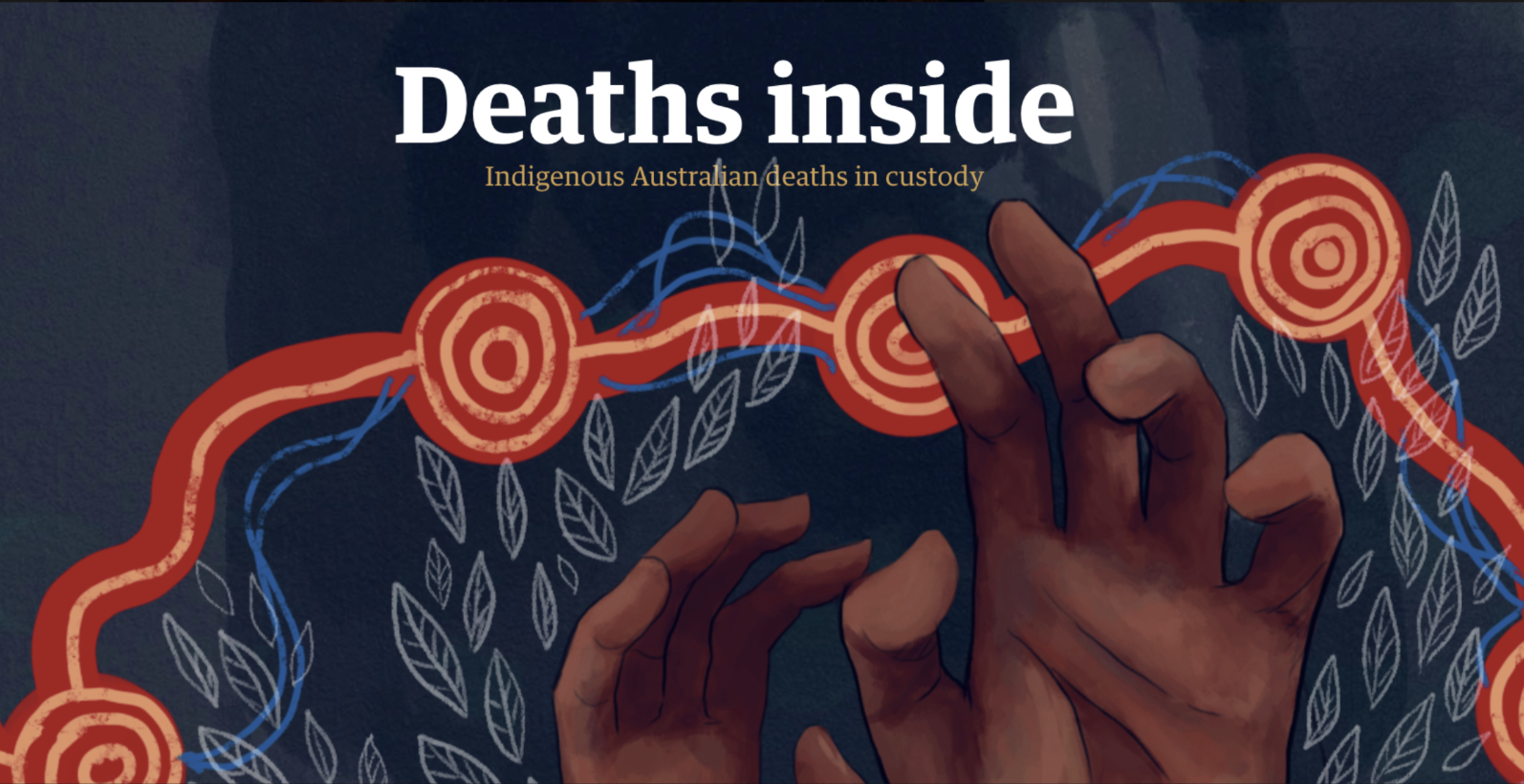
Deaths inside: Indigenous Australian deaths in custody by Guardian Australia
Legal and Institutional Barriers to Accountability
Coronial process but limited enforcement
According to the NSW State Coroner’s 2024 'Deaths in Custody/Police Operations Report’ in cases of deaths in custody, coronial inquests must investigate circumstances and can make recommendations but coroners do not themselves impose criminal penalties. Their power is advisory, and many recommendations are ignored or delayed.
No successful prosecutions
According to an article in June 2025, since the 1991 Royal Commission into Aboriginal Deaths in Custody, not a single person has been convicted for causing an Indigenous person’s death in custody. That failure has eroded trust, especially in affected communities who see systemic failure rather than isolated mistakes.
Gaps in oversight and legal protections
One longstanding reform — the Custody Notification Service (CNS) — mandates that police notify a legal support line whenever an Indigenous person is taken into custody.
What This Means for Families & Communities
For families affected by such a loss, the path to justice can be fraught:
Inquest participation: Families can appear in coronial inquests, engage counsel, make submissions, and question witnesses.
Civil claims: Where negligence or misconduct is suspected, families may pursue damages via civil lawsuits (e.g. for wrongful death, breach of duty).
Advocacy & reform: Many families become advocates — demanding transparency, implementation of coroner recommendations, and institutional reform.
But for many, legal action is lengthy, expensive, and emotionally exhausting — especially in the context of grief, systemic barriers, and distrust of institutions.
What Indigenous advocates have been asking for
To prevent further tragedies and restore trust in justice, three critical reforms stand out:
Implement and enforce coroners’ recommendations
It’s not enough to issue recommendations. Governments must commit to tracking and mandating implementation — especially those involving safety, health care access, and procedural transparency.Strengthen oversight and independent investigation bodies
State-based oversight agencies often lack teeth. A truly independent body, transparent and culturally informed, is needed to investigate custodial deaths and police conduct impartially.Address systemic drivers of over-incarceration
Deaths in custody are the outcome of many upstream failures — poverty, lack of access to health and housing, discriminatory policing, bail reforms, and inadequate diversion programs. Without reducing over-representation of Indigenous people in the justice system, the tragedies will continue.This OYBlog was created with AI assistance using the following source ‘Indigenous deaths in custody NSW 2025 record high’, ‘Coroner recommends prison communication review after Lathan Brown's death’, ‘Tane’s son still asks his grandmother: ‘How did my dad die?’ She doesn’t know what to say’ and the links contained herein.